10+ CSS Accordion Menus
Hierarchical navigation requires structural clarity. Pure CSS Accordion Menu Examples remove the friction of heavy JavaScript libraries, allowing deep menu structures to expand and collapse natively. This collection provides essential blocks for modern UI design, organizing complex links into digestible sequences. Utilizing curated snippets replaces bloated scripts with raw, functional logic.
Technically, these examples rely on the native <details> and <summary> elements or the checkbox hack for state management. The code utilizes Flexbox and max-height transitions — leveraging hardware acceleration — to ensure a smooth 60fps performance on the compositor thread. By offloading logic to the browser’s engine, these snippets maintain absolute layout stability and eliminate input latency. The HTML structure remains strictly semantic, ensuring accessibility for all users.
Every free demo is fully responsive and cross-browser compatible. Users can instantly download the raw code or fork an updated interaction on CodePen. These assets are strictly optimized for performance, delivering a fast, frictionless experience across all modern desktop and mobile devices.
Examples


A dropdown menu built with hidden checkboxes and CSS animations. Clicking the checkbox expands the list with a smooth scale transform; the arrow rotates. SCSS with mixins and variables, keyframes for animations. No JavaScript — just structure and styles.

A menu with nested items powered by radio buttons and CSS animations. Selecting an item smoothly expands its submenu, with staggered entry animations. Built with Pug and SCSS, featuring mixins, variables, and loops. No JavaScript — just structure and styles.
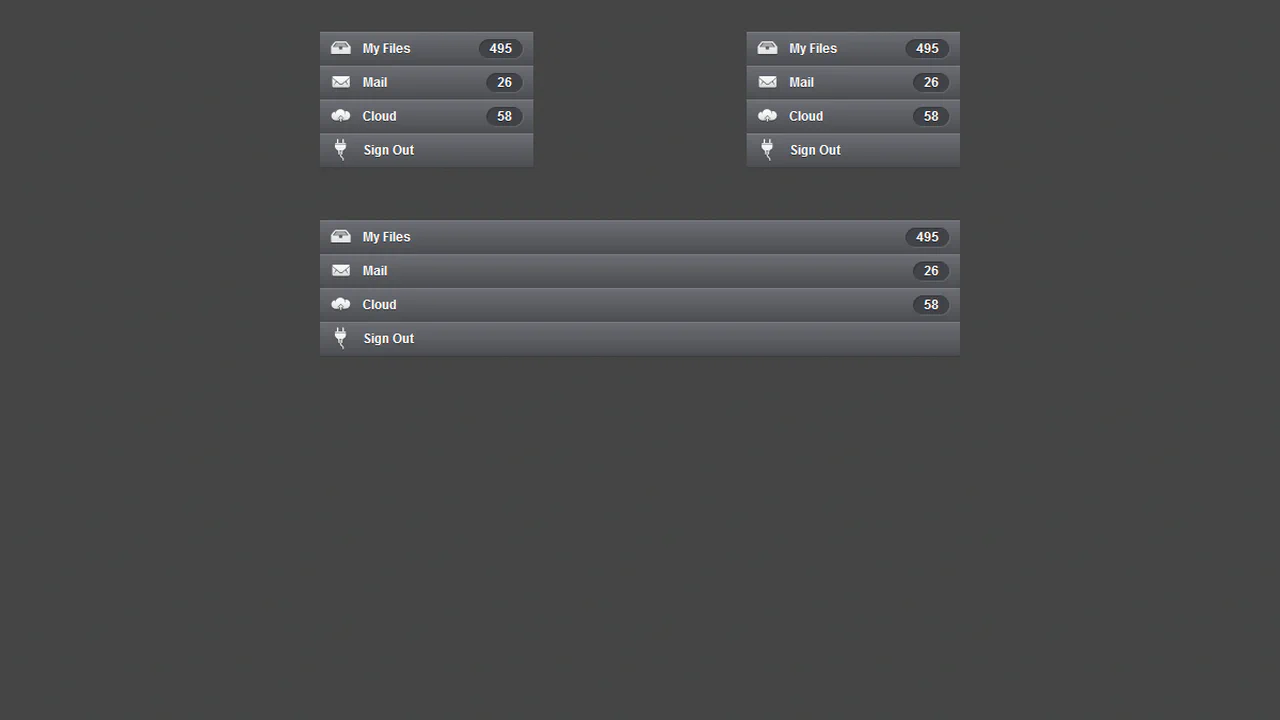
An accordion menu in pure CSS3. This menu was inspired in Futurico UI Pro by Vladimir Kudinov.
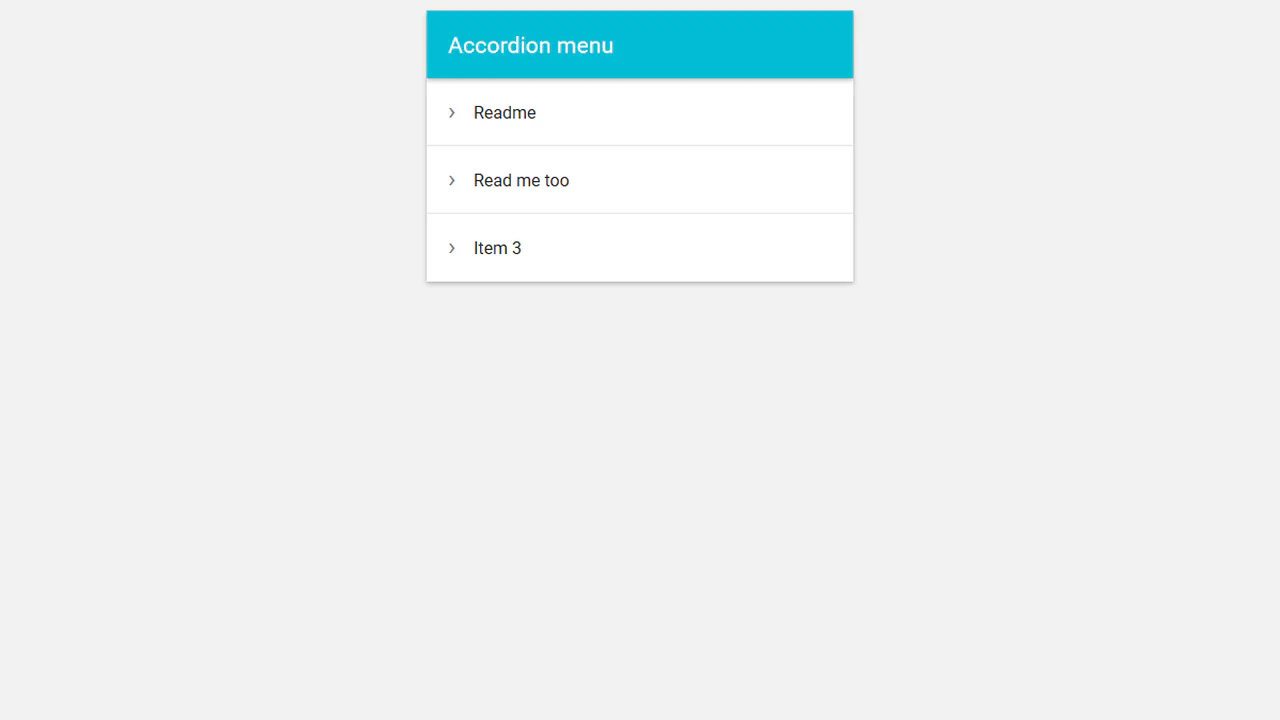
The accordion uses radio buttons: an open item can be closed by clicking its header or a dedicated hidden radio. Animations include smooth height changes and an arrow rotation. Everything works without JavaScript — just HTML and CSS.
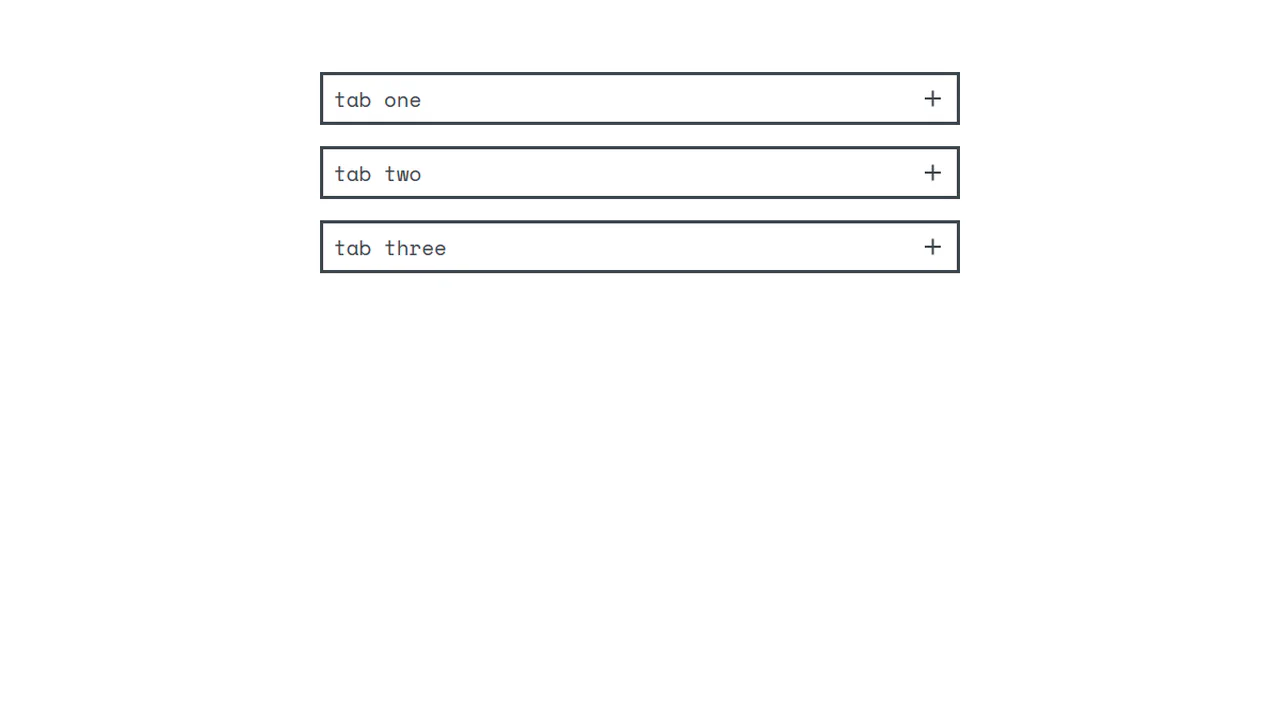
A multi‑level accordion driven by radio buttons. The second level works just like the first. Tooltips appear on hover using pseudo‑elements. Animations rely on max‑height changes and transforms. No JavaScript — just HTML and CSS.

A simple CSS accordion menu with support for sub level items.

A multi‑level accordion menu with arbitrary nesting. JavaScript toggles classes: clicking an item expands the current level while collapsing others. Folder and arrow icons change according to state. Nested items are handled correctly via parent‑element checks. The code is compact and readable.
An accordion menu that reveals sub‑items via anchor links and the CSS :target pseudo‑class. Clicking an item smoothly expands its submenu by transitioning max‑height. Styling includes gradients, Font Awesome icons, and decorative triangular indicators on hovered links. No JavaScript — just HTML and CSS.
An accordion menu powered by the CSS :target pseudo‑class. Clicking an item smoothly expands its submenu via max‑height transitions. Active items are highlighted with a sliding coloured bar on the left. No JavaScript — just HTML and CSS.
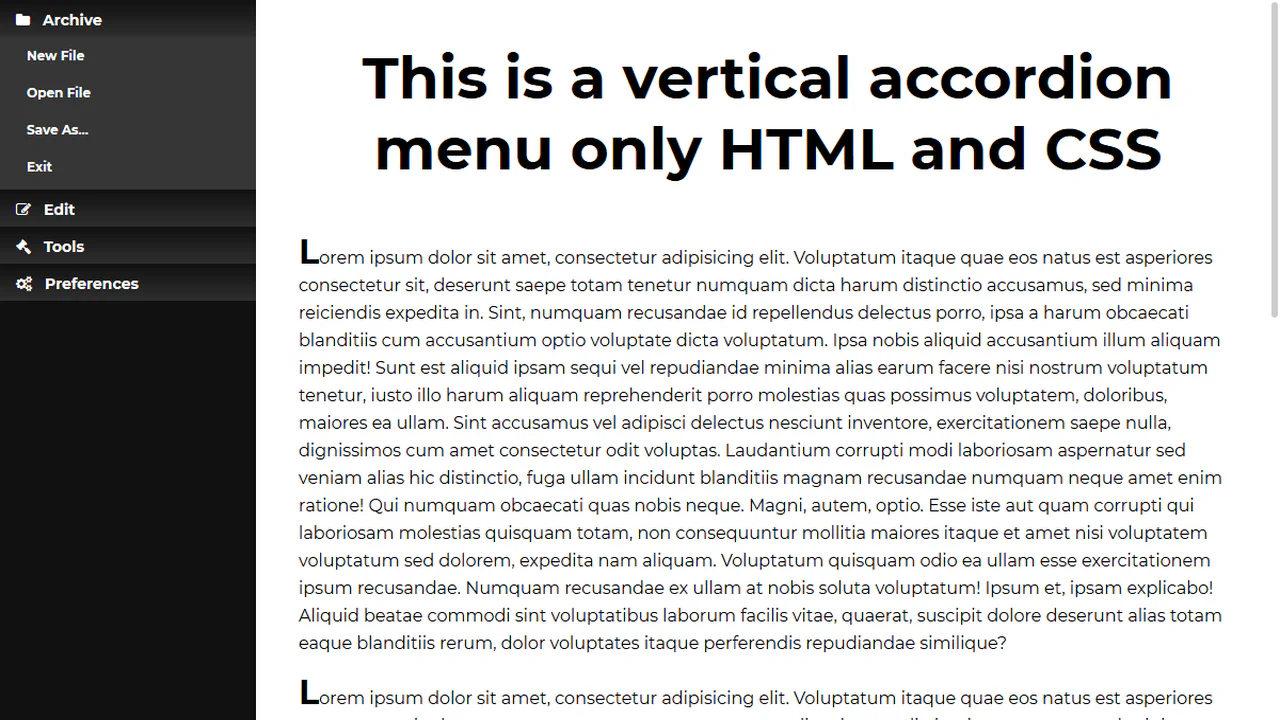
A vertical accordion menu driven by radio buttons. Selecting an item expands its submenu via height transitions, keeping others collapsed. Main content sits to the right, filling the remaining space. No JavaScript — just HTML and CSS.
An accordion menu that reveals sub‑items via anchor links and the CSS :target pseudo‑class. Clicking an item smoothly expands its submenu by transitioning max‑height. Styling includes Font Awesome icons and a triangular notch on buttons. No JavaScript — just HTML and CSS.
The accordion menu uses the CSS :target pseudo‑class. Each item links to an anchor and a hidden submenu, which expands when the target is activated. Animation is handled via max‑height. No JavaScript required.
An accordion built with Tailwind CSS using group and group-focus. Clicking the button focuses it, toggling the child menu’s max-height with a smooth transition. No JavaScript — just utilities and focus states.