10+ CSS Off-Canvas Menus
Context requires space. CSS Off-Canvas Menu Examples remove the friction of JavaScript listeners, allowing overlays to transition natively. This collection provides professional, minimalist blocks for modern UI design, organizing secondary content into digestible, tactile sequences. Utilizing these curated snippets guarantees layout stability while keeping the DOM transparent and fast.
Technically, these examples rely on the checkbox hack and absolute positioning for state management. The code utilizes Flexbox for precise alignment and transform: translateX to slide content in and out. Motion leverages hardware acceleration — animating properties like opacity and transform — to maintain a locked 60fps performance on the compositor thread. The HTML structure remains strictly semantic, supporting accessible navigation.
Every free demo is fully responsive and cross-browser compatible. Users can instantly download the raw code or fork an updated interaction on CodePen. These assets are strictly optimized for performance, delivering a fast, frictionless experience across all modern devices.
Examples
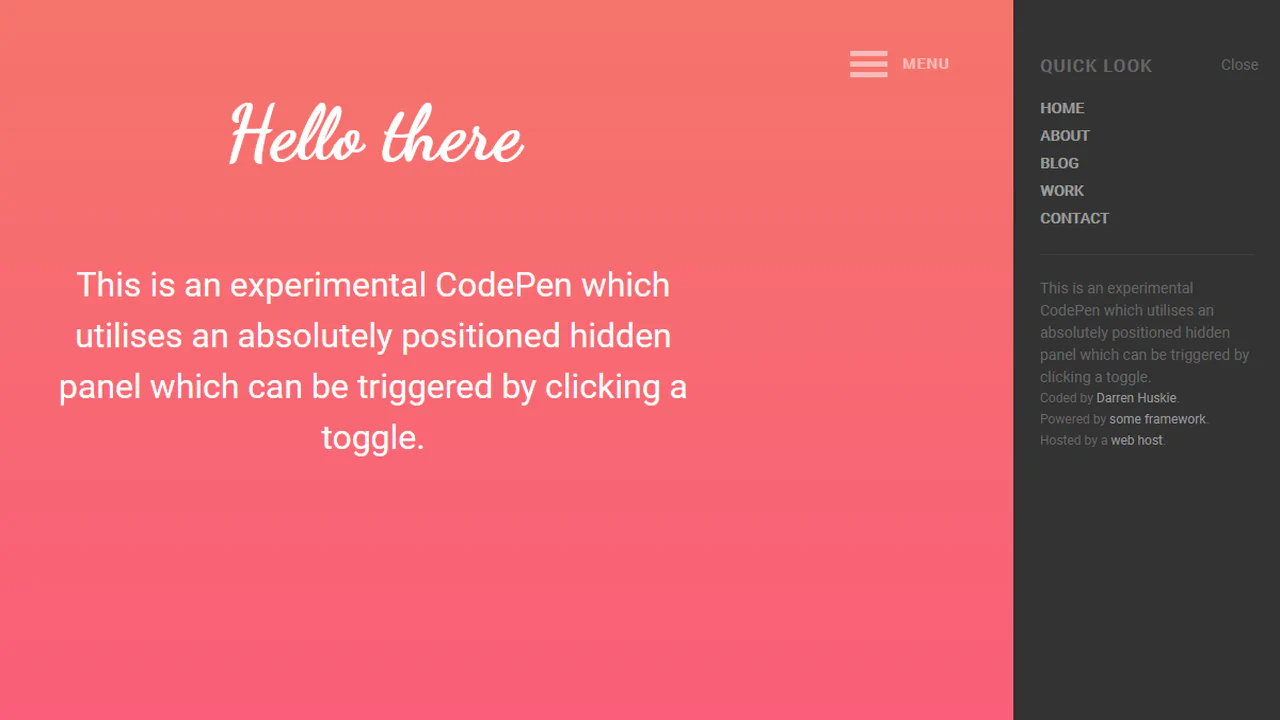

A mobile side-panel menu activated by JavaScript for state control. The SCSS applies 3D transforms (rotate) and negative positioning to animate the content sliding in from off-screen, creating a smooth, physics-based navigation reveal.
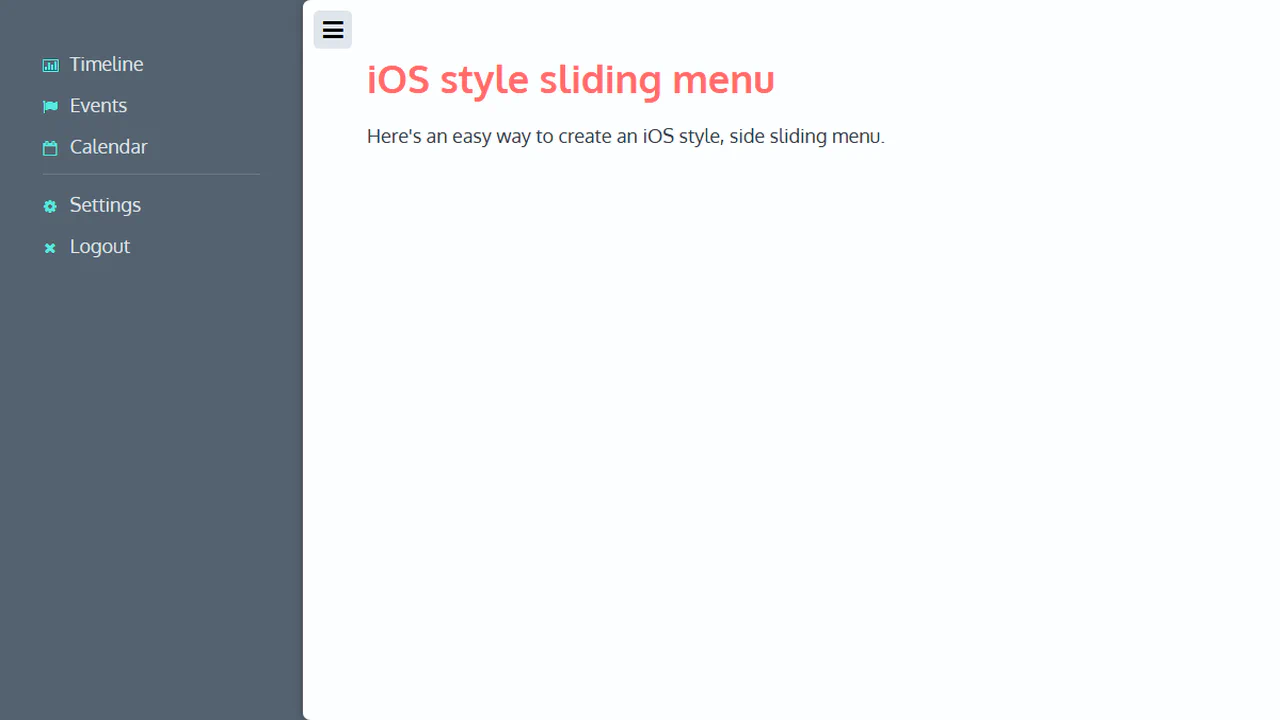
A JavaScript-controlled side menu mimicking an iOS style, activated by toggling a class on the body element. The SCSS employs fixed positioning and CSS transformations for the smooth sliding transition of both the sidebar and the main content area.
An off-canvas navigation menu controlled purely by the CSS :checked state. The design features menu items sliding out with 3D rotation (rotateY) and staggered delays, creating a smooth, CSS-only reveal interaction.
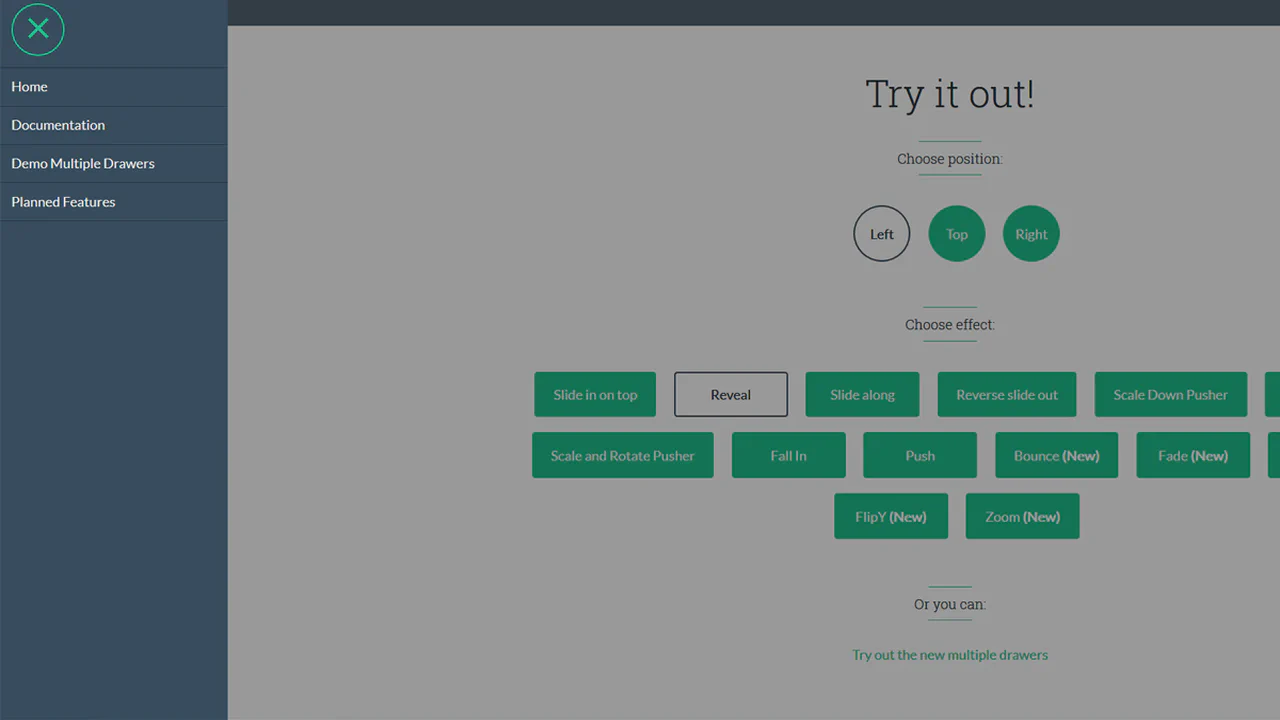
Pure CSS drawer comes with a lot of nice features.
An off-canvas navigation component controlled by JavaScript to toggle a class on the body. The SCSS manages the translation and fading of the main content area, creating a distinct sliding menu effect.
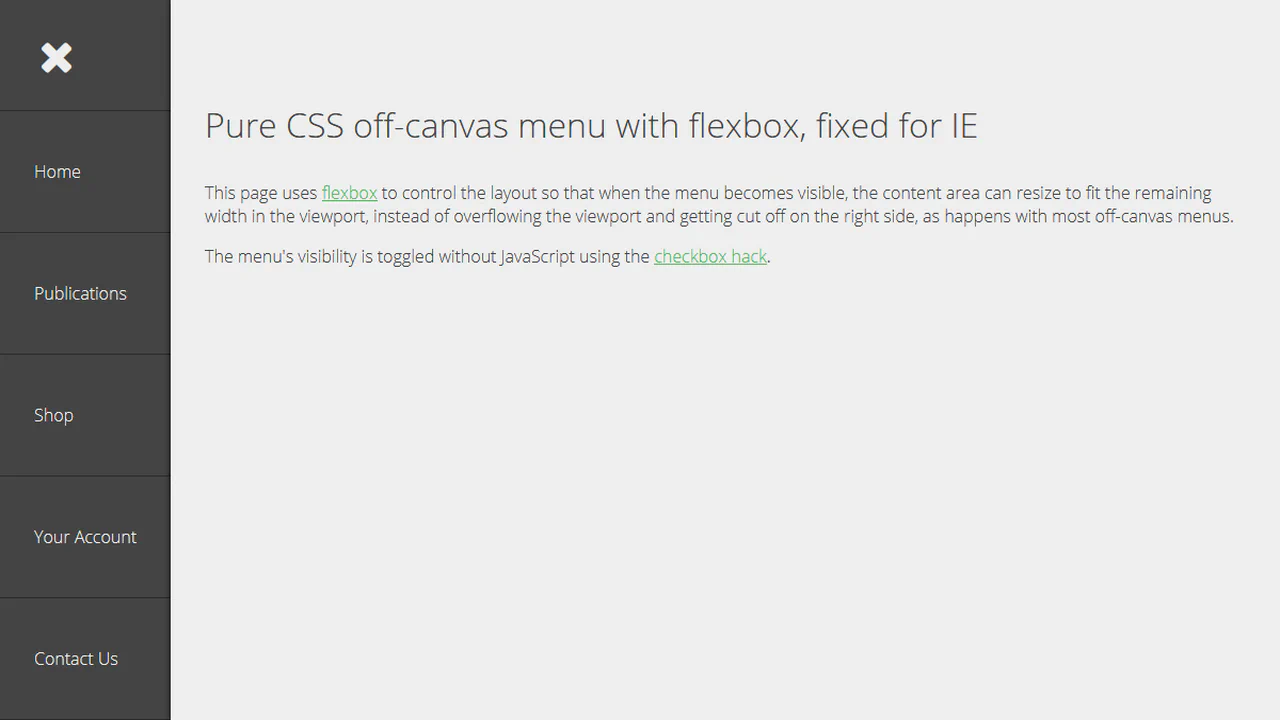
An off-canvas navigation menu completely controlled via the CSS “checkbox hack.” The design uses Flexbox to manage content movement upon toggle, animating the hamburger icon into a cross using CSS transforms for a clean, interactive side panel.

A fixed off-canvas navigation menu controlled entirely by the CSS “checkbox hack.” The layout shifts the main content using pure CSS transitions upon activation, providing a clean, interactive slide-out menu pattern.

A fixed sidebar navigation menu toggled by the CSS “checkbox hack.” The design incorporates a transforming hamburger icon and smoothly sliding navigation links with staggered transitions, emphasizing a clean, pure CSS interaction model.

A side navigation menu toggled via JavaScript by manipulating a class on the body element. The SCSS utilizes 3D transforms and smooth transitions to slide the main content and reveal the navigation links, creating a clean off-canvas UI pattern.
A fixed sidebar menu toggled via the CSS :checked selector. Navigation items reveal themselves with staggered 3D transforms (translate3d, rotateY) and delays, providing a smooth, dynamic off-canvas interaction entirely in CSS.
A side navigation menu controlled entirely by the pure CSS :target selector for state management. The hamburger icon animates into a close symbol, and the menu container slides in using custom cubic-bezier easing for a modern, smooth interaction.
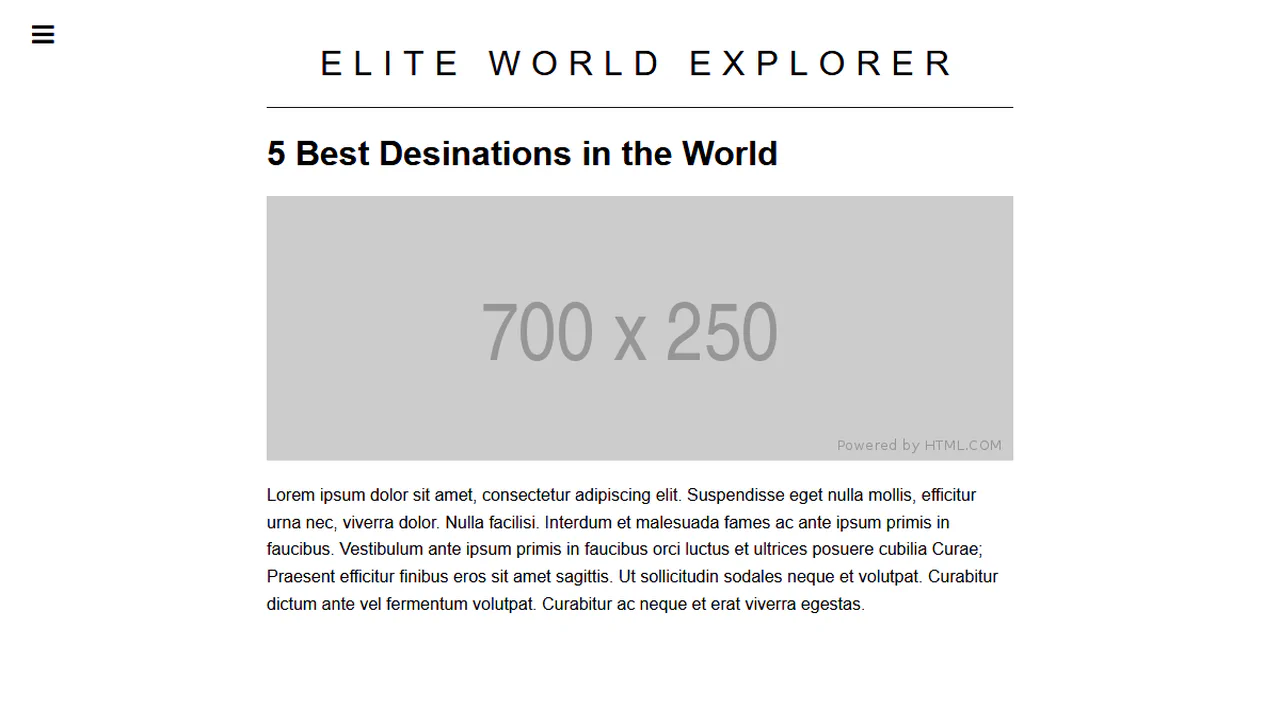
An off-canvas sidebar menu controlled solely by the CSS :checked pseudo-class. The navigation slides in smoothly using CSS transitions, which also manage the main content shift, creating a clean interactive sidebar experience.
A fixed sidebar menu toggled purely via the CSS :checked state (“checkbox hack”). Activation triggers smooth sliding transformations for both the main content and the hamburger icon rotation, resulting in a clean off-canvas navigation UI.
