20+ CSS Reveal Animations: Free Code Snippets & Examples
CSS reveal animations orchestrate the sequential discovery of interface elements, establishing a deliberate pacing that guides user attention as they navigate the spatial context of a page. By delaying the visibility of secondary information, developers can reduce cognitive load and create a highly immersive narrative flow.
- Modern implementations leverage the native Scroll-driven Animations API to link animation timelines directly to the viewport scroll position, bypassing imperative JavaScript event listeners.
- High-performance reveals utilize hardware-accelerated properties like clip-path and opacity, ensuring the compositor thread handles the visual unmasking without triggering expensive main-thread layout recalculations.
- State-driven visibility shifts increasingly integrate the View Transitions API, creating seamless, deterministic interpolations between hidden and revealed DOM states with zero structural overhead.
Examine these progressive disclosure techniques to refine how your layouts unfold and command visual hierarchy.
Table of Contents:
Examples
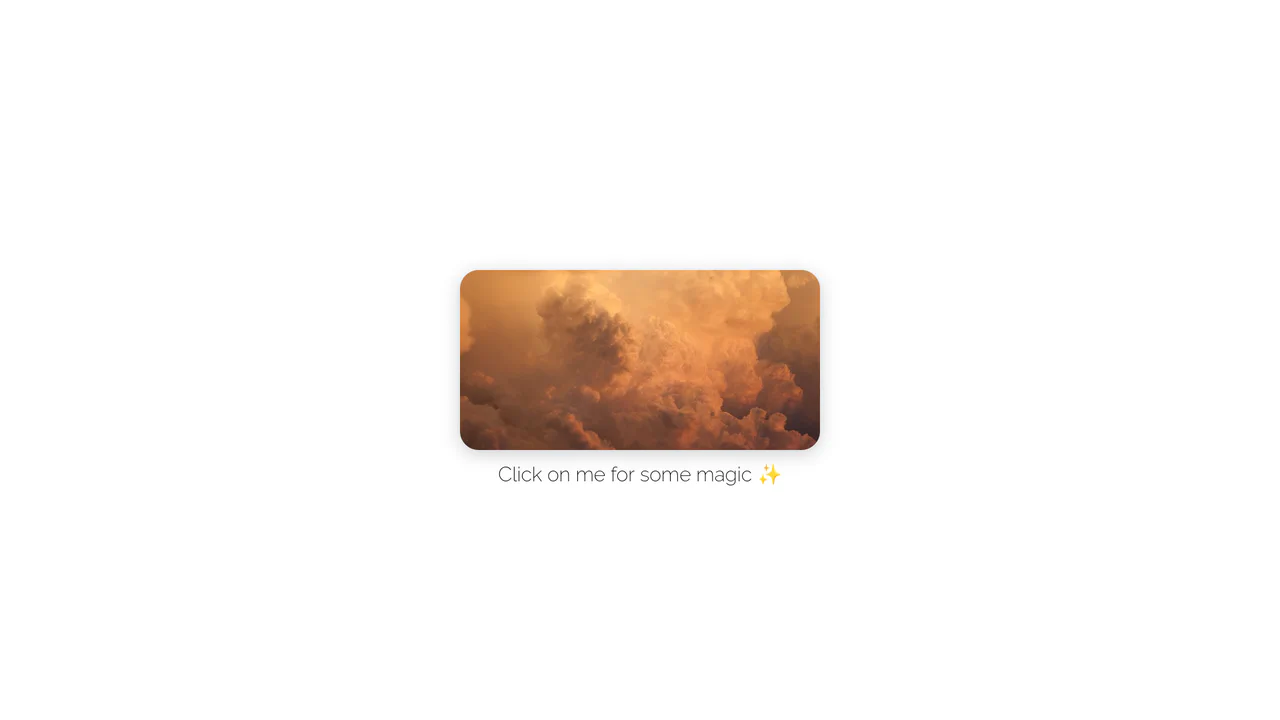
Rounded Inset Clip-Path Image Reveal
This interactive image gallery showcases an organic full-screen grid transition powered by clipping bounds. By masking a multi-column CSS grid of photographs with clip-path: inset(), the initial state reveals only a rounded, centered viewport window. A simple JavaScript click toggle expands the mask boundaries to full scale, transforming the thumbnail window into a comprehensive gallery.
 Chrome 55+
 Edge 79+
 Firefox 54+
 Safari 9.1+
See the Pen Rounded Inset Clip-Path Image Reveal.

SVG Flashlight Reveal Effect
This is an SVG Flashlight Reveal Effect. It animates a volumetric cone of light across a dark canvas, using SVG masking to dynamically reveal and illuminate hidden text. Its function is to create a cinematic, narrative-driven focal point, turning standard typography into an exploratory visual experience.
Chrome 51+
Edge 79+
Firefox 54+
Safari 10+
See the Pen SVG Flashlight Reveal Effect.

CSS Scroll-Animated Accordion Vertical Timeline
This is a Scroll-Animated Bootstrap Accordion Timeline. It structures sequential data into a central vertical axis, combining visual anchor points (images) with collapsible text modules (accordions). Its function is to compress dense historical or process-oriented information into a scannable format. Nodes remain hidden until scrolled into the viewport, forcing user focus on the active temporal step. (Requires: bootstrap, font-awesome)
Chrome 115+
Edge 115+
Firefox 114+ (flag)
Safari 26+
See the Pen CSS Scroll-Animated Accordion Vertical Timeline.

Scroll-Driven Sticky Text Reveal
Scroll-Driven Sticky Text Reveal is a high-end typographic interface. It utilizes modern CSS scroll timelines to synchronize the visual state of a list with the user’s scroll position. As items move through a designated “focal point,” they transition from a dimmed state to a vibrant highlight, creating a seamless reading experience. (Requires: tweakpane)
Chrome 115+
Edge 115+
Safari 26+
See the Pen Scroll-Driven Sticky Text Reveal.
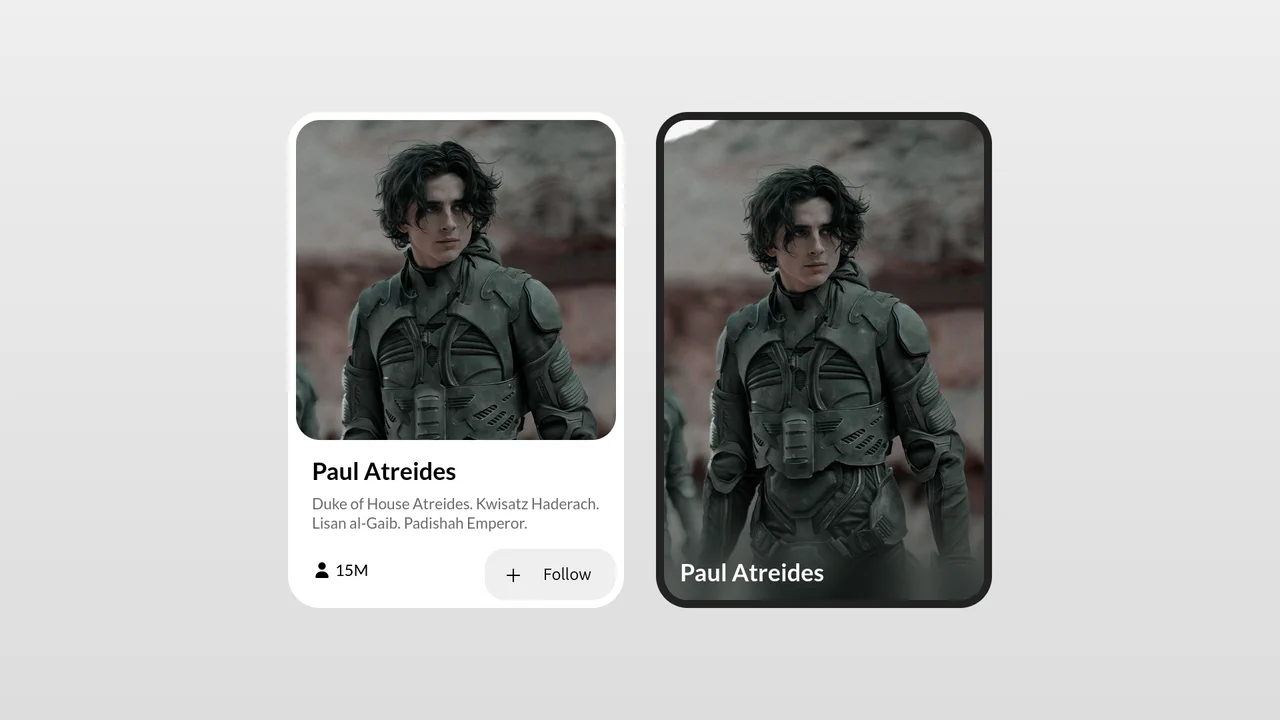
Morphing Profile Card Interaction
This Morphing Profile Card is a sleek UI component perfect for social platforms or team pages. Initially, it presents a large, immersive portrait. Upon interaction (hover or focus), the image smoothly transitions from a portrait ratio to a square, sliding up to reveal detailed profile information and action buttons hidden below. The animation is fluid and adds a layer of discovery to the interface. (Requires: Font Awesome, Google Fonts)
Chrome 88+
Edge 88+
Firefox 87+
Safari 15+
See the Pen Morphing Profile Card Interaction.

CSS Scroll-Driven Masonry Reveal
This Scroll-Driven Masonry Reveal creates a playful, tactile experience where content cards appear to be “dealt” onto the screen as the user scrolls. By leveraging the native CSS Scroll-driven Animations API, it achieves smooth, main-thread-free entrance effects without a single line of JavaScript. The layout adapts intelligently from 2 to 8 columns, making it a robust solution for image galleries or blog archives. (Requires: Open Props (CSS Library))
Chrome 115+
Edge 115+
Safari 26+
Firefox (flag/polyfill)
See the Pen CSS Scroll-Driven Masonry Reveal.

CSS Staggered Bars Reveal Animation
This Staggered Bars Reveal Animation creates a cinematic intro for landing pages using zero JavaScript. By orchestrating a single pseudo-element (::after) with complex linear-gradient backgrounds, the component simulates seven distinct bars sliding into place. The animation cleverly shifts the background-position of each gradient strip sequentially, creating a rhythmic “wipe” effect that culminates in the text appearing.
Chrome 100+
Edge 100+
Safari 14+
Firefox 90+See the Pen CSS Staggered Bars Reveal Animation.

clip-path controls the shape of the viewport (from a point to a full frame), while transform applies a subtle scaling effect to the image, creating a cinematic reveal.
This is a complex staggered animation of the heading and image, utilizing a custom cubic-bezier function to create a unique, cinematic feel for the content reveal.
This typographic display component utilizes volumetric spatial layering and mix-blend-mode to create a high-contrast, tactile interface that effectively manipulates visual depth. The architecture orchestrates state via CSS-driven keyframe animations, offloading heavy rendering tasks to the GPU by utilizing hardware-accelerated clip-path polygon transforms. By minimizing main-thread DOM manipulation in favor of declarative path transitions, the component achieves fluid, performant motion. This results in a cohesive sensory feedback loop where the text appears to physically shift across focal planes, significantly enhancing user engagement through kinetic, immersive typography.
This responsive grid component employs a dynamic layout strategy to facilitate fluid spatial transitions between contrasting visual states. The technical core relies on the CSS grid-template-columns property, which orchestrates structural shifts via fractional unit scaling, while offloading interpolation to the browser’s compositor for smooth frame delivery. By utilizing CSS-driven layout transitions instead of layout-triggering properties, the component maintains high performance through minimal repaints.
This transition component leverages a multi-layered, synchronized overlay system to enact a dramatic visual reveal of underlying content. The technical implementation utilizes CSS keyframe-staggering to orchestrate sequential height collapses across three distinct structural panes, ensuring layout stability by offloading animation logic entirely to the CSS engine. By treating the DOM elements as purely aesthetic masks for the underlying imagery, the component avoids layout thrashing, maintaining high frame rates through GPU-accelerated visibility transitions.
This cinematic card uses spatial depth to create a tactile narrative transition, wherein lightweight JavaScript triggers orchestrate the interaction state and CSS handles the heavy rendering lifting via fluid transforms. By utilizing transition delays to synchronize typographic fades with a hardware-accelerated clip-path inset, the UI avoids layout recalculations to deliver a dramatic unfolding effect with a physical sense of discovery.
A volumetric circular revealer employing spatial depth through layered masking, where two opposing biomechanical shutters retract symmetrically to expose hidden content via rotational pivot points. JavaScript is absent — CSS pseudo-class :hover orchestrates the state transition, while transform-origin and rotate() perform the heavy rendering, offloading compositing to the GPU through backface-visibility: hidden.
This tactile photo frame utilizes geometric masking to execute a volumetric heart-to-square reveal, wherein native triggers or lightweight JavaScript orchestrate the state and CSS handles the rendering heavy lifting. By staggering logical transition delays on padding boundaries to avoid layout recalculations and ensure fluid compositing, the UI delivers an elastic visual transition with a delightful physical sense of discovery.
This geometric transition component employs advanced CSS border-image and clip-path logic to orchestrate a fluid volumetric morph between heart-shaped and rectangular states. The technical architecture relies on CSS variables for parametric scaling, delegating rendering to the GPU through optimized layout transforms to ensure frame-perfect interpolation. By dynamically adjusting the clipping path and padding on interaction, the component delivers a tactile, elastic visual feedback loop that creates a seamless and highly responsive user experience.
This UI component utilizes a high-contrast layering strategy to execute a raw, focused reveal of hidden data. Technical implementation leverages GPU-accelerated opacity transitions and precise cubic-bezier timing to ensure fluid state shifts without layout thrashing. The interaction distills complexity into a rhythmic unveiling, providing tactile feedback that prioritizes visual clarity and performance.
This minimalist component uses mix-blend-mode to mask underlying imagery through a high-performance vector stroke animation. By orchestrating stroke-dashoffset within a declarative keyframe loop, the system offloads rendering to the GPU for fluid, jitter-free precision. This rhythmic unveiling distills complexity into a raw, functional interaction that prioritizes performance and clarity.
This modular card component uses cubic-bezier timing to execute a precise, mechanical reveal of imagery and typography. Technical implementation relies on transform and overflow: hidden to shift content layers with GPU-accelerated smoothness. This interaction creates a functional, rhythmic sense of expansion that prioritizes clarity and physical responsiveness.
This kinetic text component utilizes a pseudo-element masking strategy to execute a surgical, time-staggered reveal. Technical implementation leverages keyframes and cubic-bezier timing to orchestrate the spatial collapse of colored blocks, offloading rendering to the GPU for fluid precision. The interaction produces a sharp, rhythmic unveiling that prioritizes visual focus through deliberate, mechanical motion.
This typographic reveal component employs a dual-layer pseudo-element masking system to execute a precise, synchronized layout transition. Technical implementation leverages keyframes and cubic-bezier timing to orchestrate the spatial traversal of color blocks, offloading rendering to the GPU for fluid motion. The interaction delivers a sharp, rhythmic unveiling that prioritizes visual clarity through deliberate, mechanical motion.
This typographic glitch component uses a data-driven pseudo-element system to create a raw, digital distortion effect. Technical implementation leverages CSS steps(1) timing and custom properties to swap characters during animation, offloading the frame-by-frame rendering to the GPU for sharp precision. This interaction distills complexity into a stuttering, rhythmic unveiling that prioritizes high-fidelity visual performance.
This grid component leverages clip-path and GPU-accelerated compositing to execute a high-fidelity visual reveal. Technical implementation uses CSS custom properties to bind unique geometry states to individual grid cells, ensuring fluid transitions without layout thrashing. The interaction distills complex spatial morphing into a raw, functional unveiling that prioritizes performance and visual precision.
This kinetic folding component employs preserve-3d transforms and staged transition delays to execute a physical, origami-like reveal of nested content. Technical implementation utilizes an invisible checkbox hack to manage state, offloading complex 3D transformations to the GPU for fluid, synchronized motion. The interaction distills data into a rhythmic, tactile unfolding that prioritizes spatial depth and precision.
This accordion component employs native input state management to execute high-contrast structural expansions. Technical implementation leverages max-height transitions to dynamically toggle content visibility, offloading layout calculations to the browser’s compositor for smooth, jitter-free performance. The interaction provides a rhythmic, mechanical disclosure of information, prioritizing functional clarity and physical responsiveness.
Striking hero image and heading reveal animation, controlled by CSS Custom Properties for timings and a custom easing function, delivering a smooth and precise UX.