10+ CSS Solar Systems
Orbital mechanics demand precise calculation. The CSS Solar System Examples collection removes flat static barriers, bringing deep spatial relationships to the screen. Modern UI design utilizes these curated snippets to build complex procedural animations.
These examples rely on strict trigonometric layouts. The code utilizes nested HTML containers and transform-origin to define orbital paths. Movement leverages hardware acceleration, animating transform: rotate to guarantee infinite, smooth 60fps cycles on the GPU. This ensures high layout stability without JavaScript physics engines.
Every free demo is fully responsive and cross-browser compatible. Users can instantly download the raw code or fork an updated orbit on CodePen.
Examples

A procedural simulation of the solar system using modern CSS trigonometric functions and custom properties. Orbital mechanics are calculated through native cos() and sin() functions within the translate property, eliminating the need for JavaScript logic.

CSS-driven solar system simulation utilizing 3D transforms and keyframe animations. Functional toggles for perspective, zoom, and data visualization. Scalable orbital mechanics mapped through DOM hierarchy and relative units.
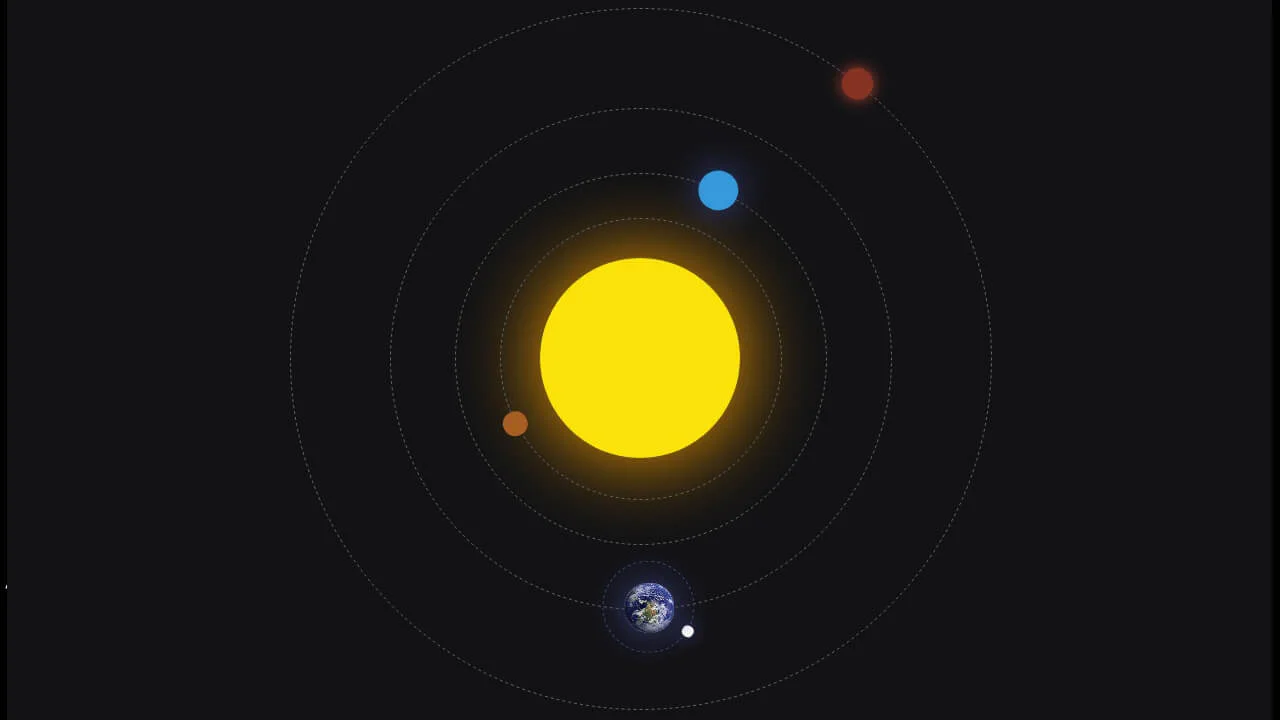
A geometric model of planetary orbits built on absolute positioning and box-shadow effects. The code adheres to structural logic, where each element manages its orbital period through independent animation timing intervals.
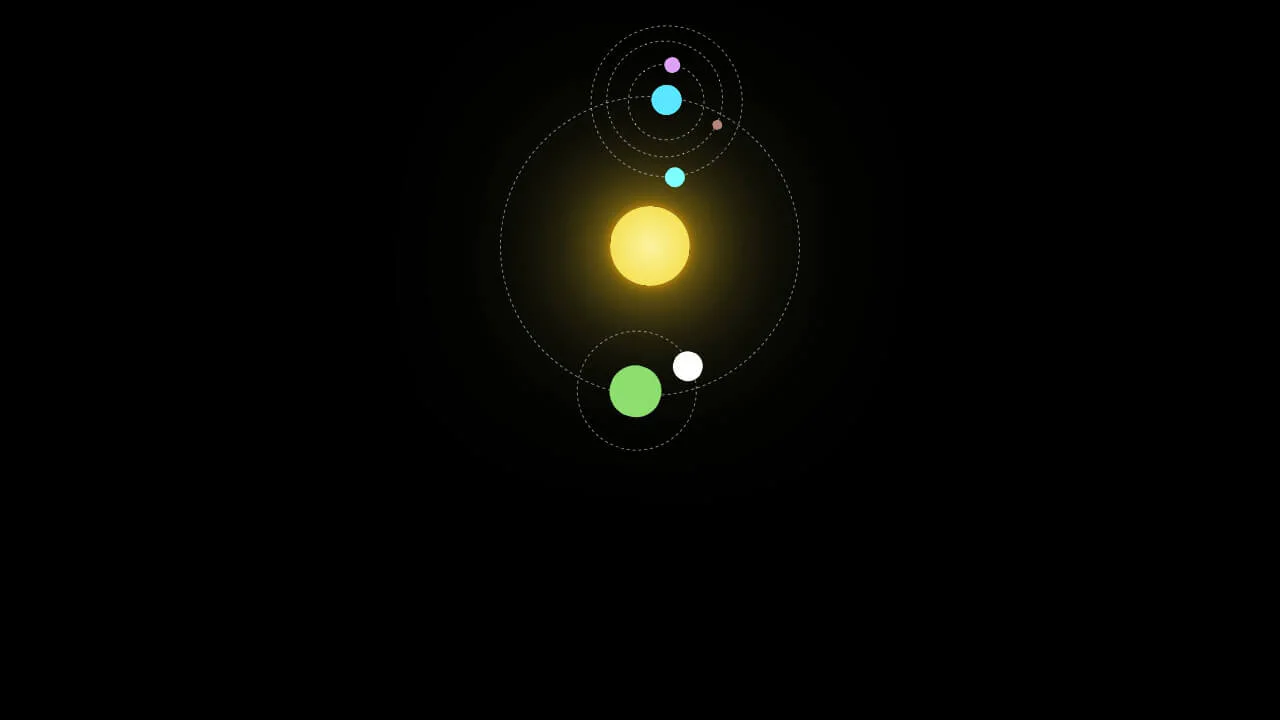
Abstract orbital motion model built with pure CSS. The planetary interaction relies on DOM nesting and transform-origin properties. Radial gradients and layered shadows simulate light emission without raster graphics.
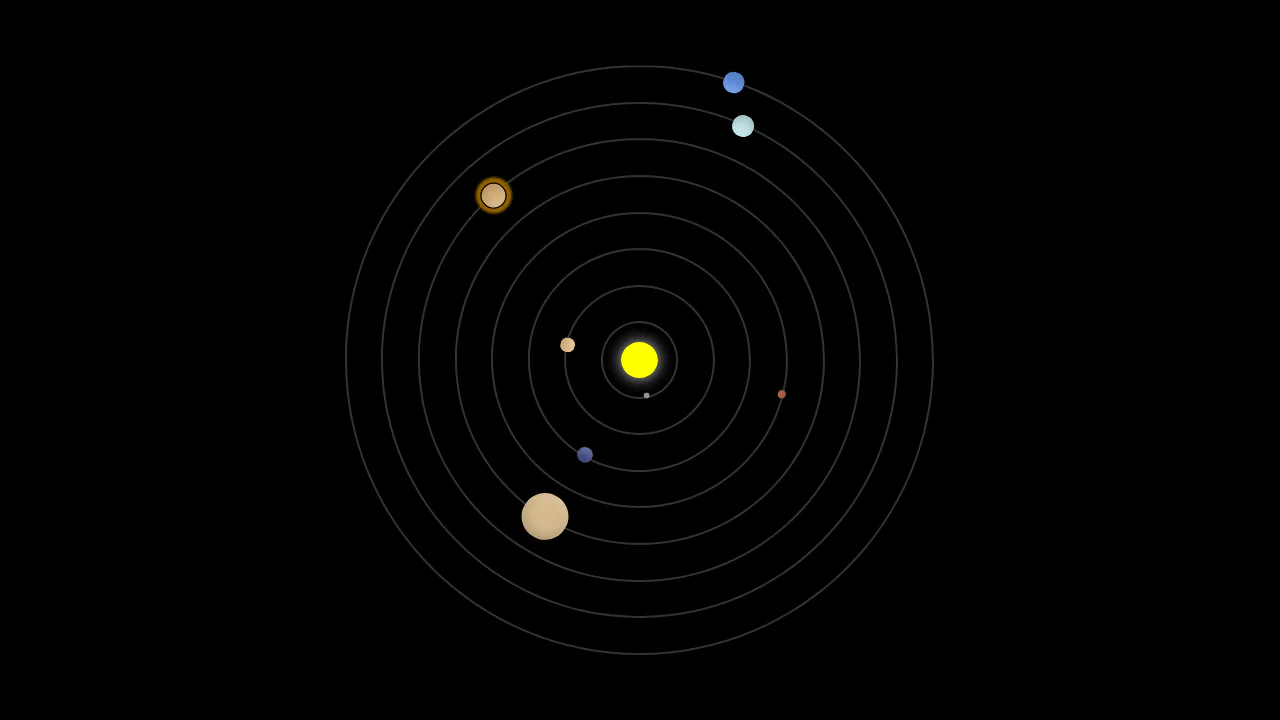
Procedural solar system model using SCSS. Data lists and @for loops automate the generation of orbits and planetary proportions. Pure motion logic via CSS Keyframes with zero JavaScript.
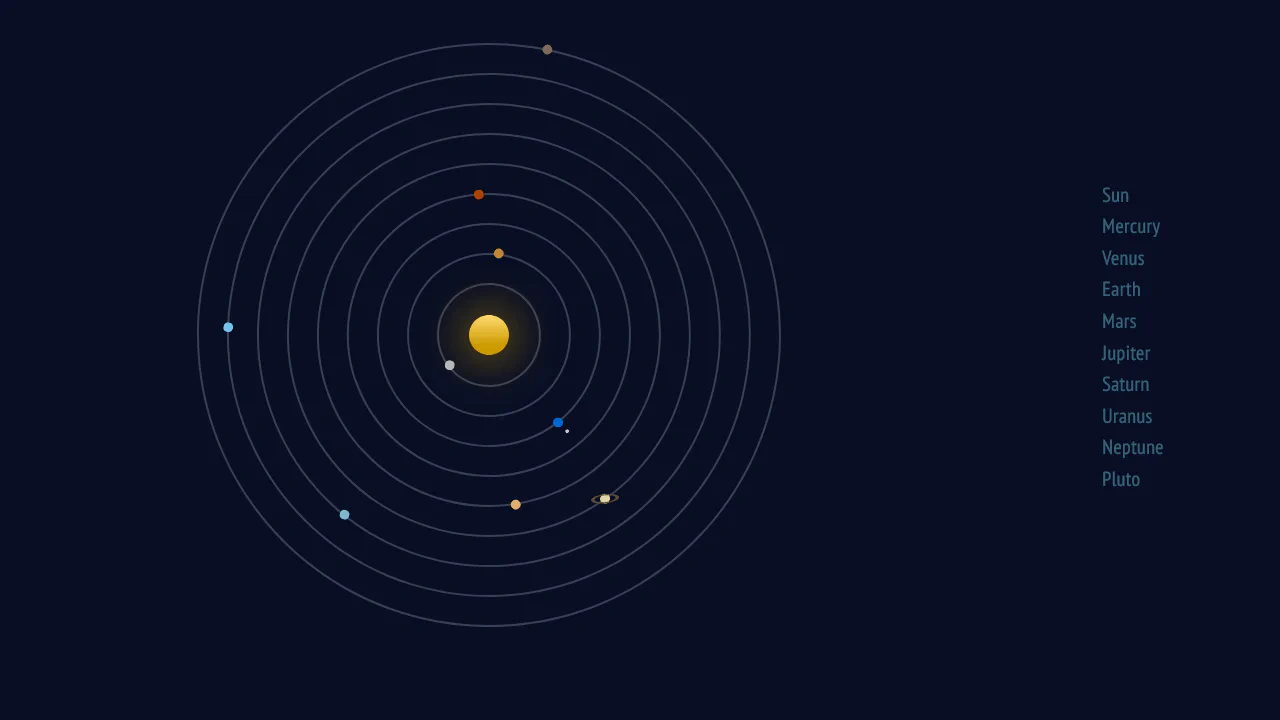
A pure CSS interactive solar system model. Orbital dynamics are driven by infinite rotate transformation loops. Hover states manage content visibility and element scaling.

A procedural orbital system utilizing SVG filters to simulate fluid geometry. SCSS keyframes drive synchronized motion across multiple layers for a clean and functional loading experience.

Nested CSS containers simulate planetary orbits with rotational speeds driven by a gravitational constant variable. The background features a procedural field of 300 stars generated via SCSS iteration.

A scalable solar system model utilizing 3D transforms. CSS animations drive rotation and glow effects, while JavaScript manages the logical progression of time intervals. Performance-oriented clean structure.

SCSS-driven orbital system using mathematical functions for rotational velocity. Surfaces leverage pseudo-elements and inset shadows to achieve depth and texture within a minimal DOM structure.

SCSS-driven orbital system using mathematical functions for rotational velocity. Surfaces leverage pseudo-elements and inset shadows to achieve depth and texture within a minimal DOM structure.

SCSS-driven orbital system using mathematical functions for rotational velocity. Surfaces leverage pseudo-elements and inset shadows to achieve depth and texture within a minimal DOM structure.

Recursive generator for nested orbital systems. SCSS loops calculate timing and scale through mathematical dependencies, ensuring fluid 3D rotation. Pure structural logic without redundant abstractions.
