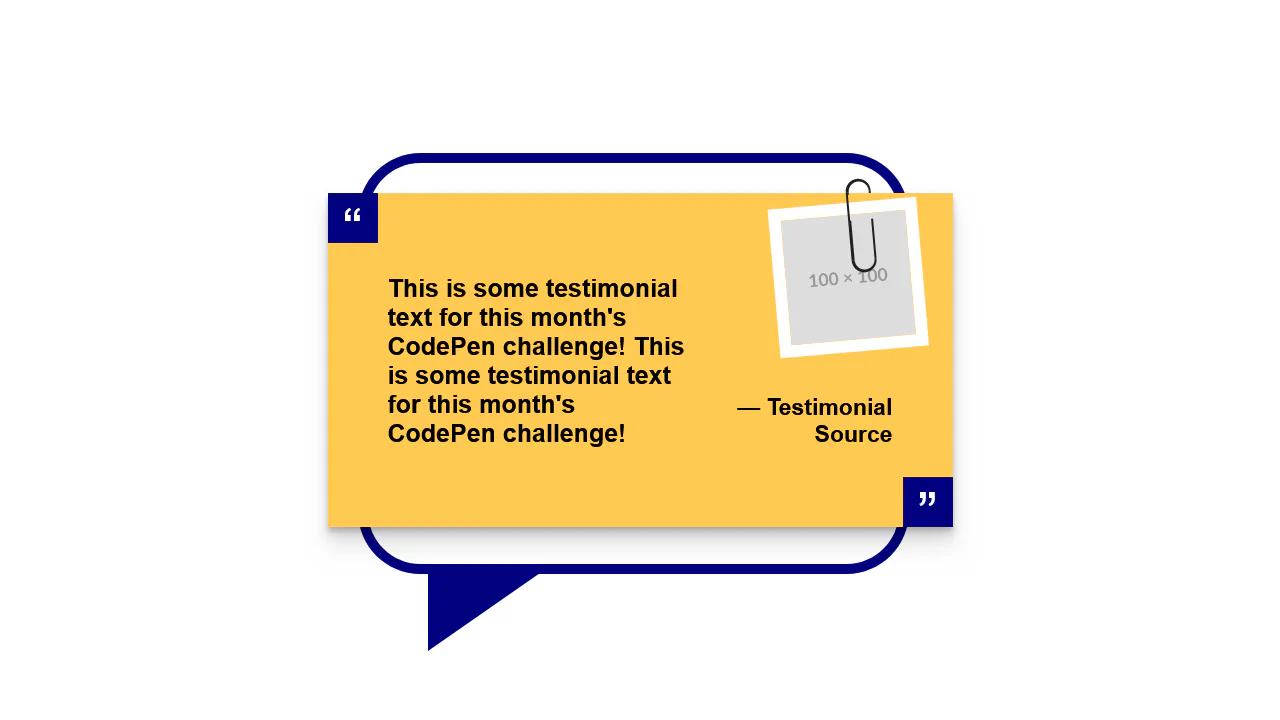
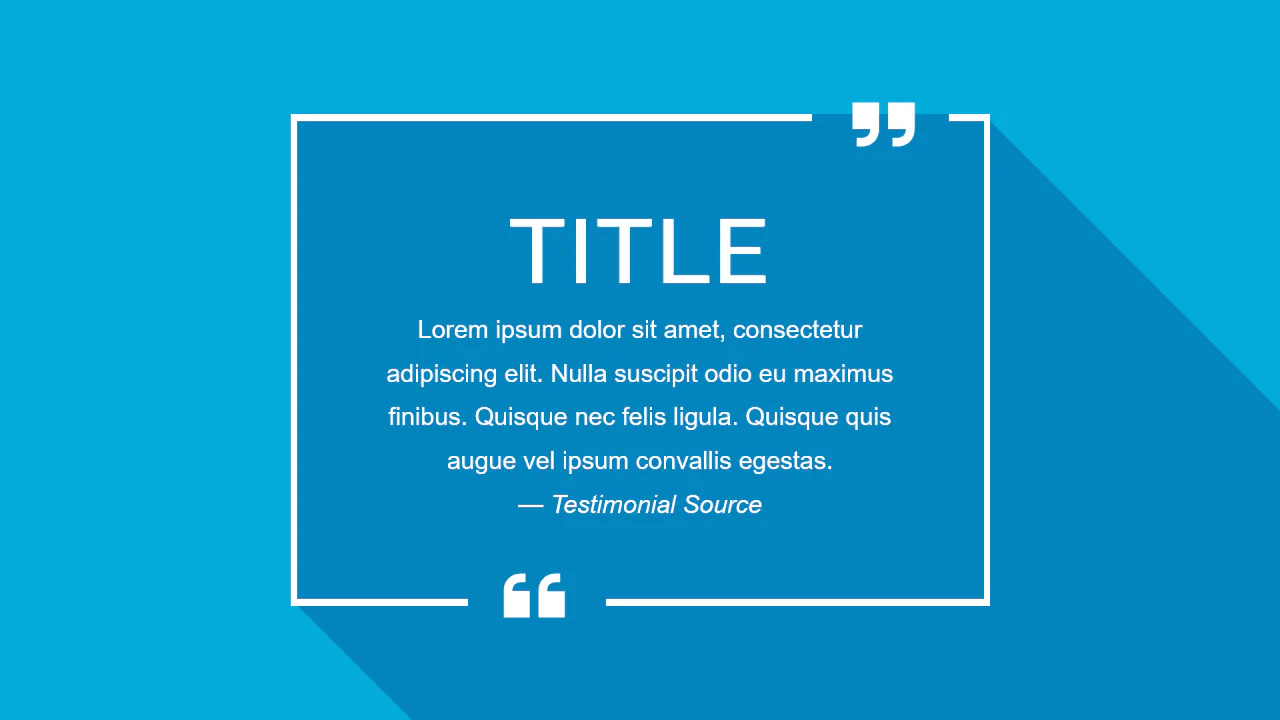
10+ CSS Testimonials
Social proof requires unfiltered clarity. Pure CSS testimonial examples remove visual bloat, presenting user feedback without distraction. This updated collection delivers functional, minimalist blocks for modern UI design. Utilizing curated snippets ensures that the narrative — the review itself — commands attention. Raw code dictates structure. No friction.
Technically, the logic relies on CSS Grid and Flexbox for precise avatar and text alignment. Layouts utilizing sliders employ scroll-snap-type for tactile navigation, bypassing heavy JavaScript engines entirely. Interaction states leverage hardware acceleration, targeting opacity and transform to guarantee a 60fps performance on the compositor thread. The HTML remains strictly semantic, maintaining high layout stability and speed.
Every free demo is fully responsive and cross-browser compatible. Users can instantly download the raw code or fork a specific block on CodePen.
Examples


Five testimonials are laid out with CSS Grid, each card explicitly placed via grid-column and grid-row. Colors and shadows are set directly — no extra abstractions. Responsiveness scales the grid on medium screens and stacks vertically on narrow ones. No JavaScript, just structure and styles.

CSS-Only Testimonials Using Scroll Snap
A powerful demonstration of building a full-featured carousel entirely with CSS, leveraging experimental ::scroll-button, ::scroll-marker, and position-anchor for navigation, indicators, and positional layout without any JavaScript.
See the Pen CSS-Only Testimonials Using Scroll Snap.
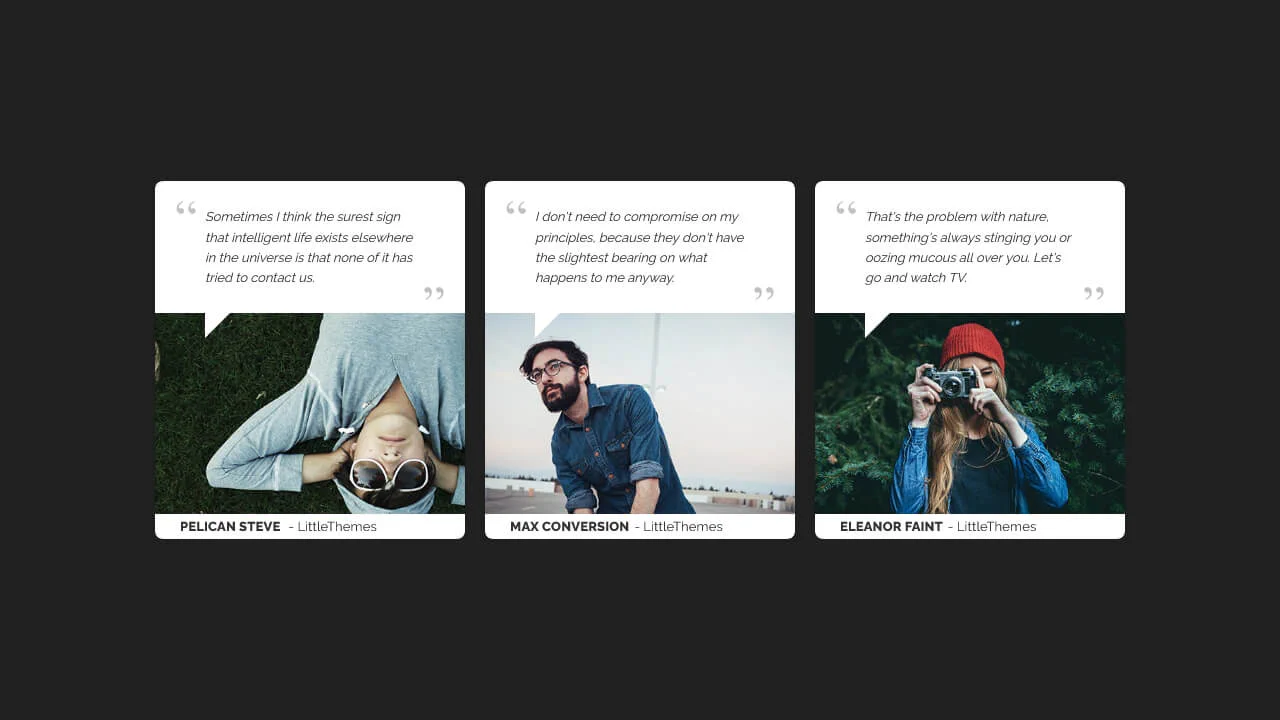
A speech-bubble style testimonial card constructed using absolute positioning for layout layering.
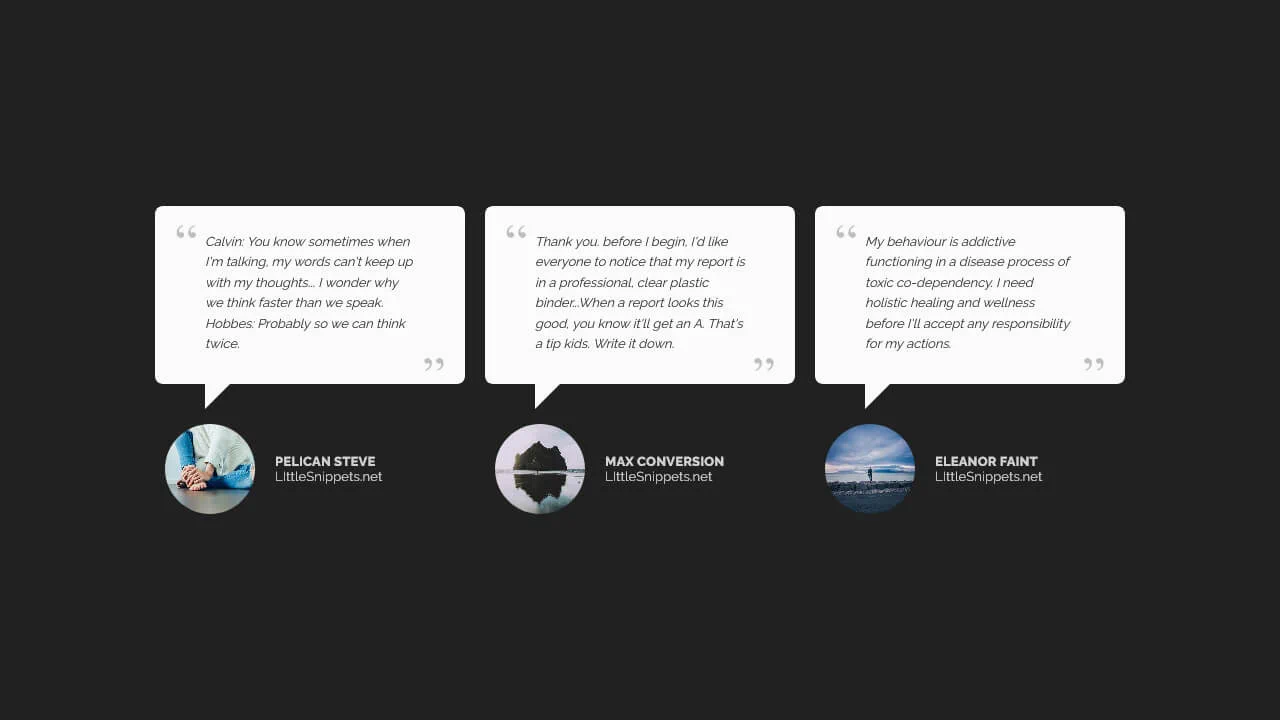
A conversational testimonial card styled as a speech bubble, leveraging the CSS border hack to generate the geometric pointer.
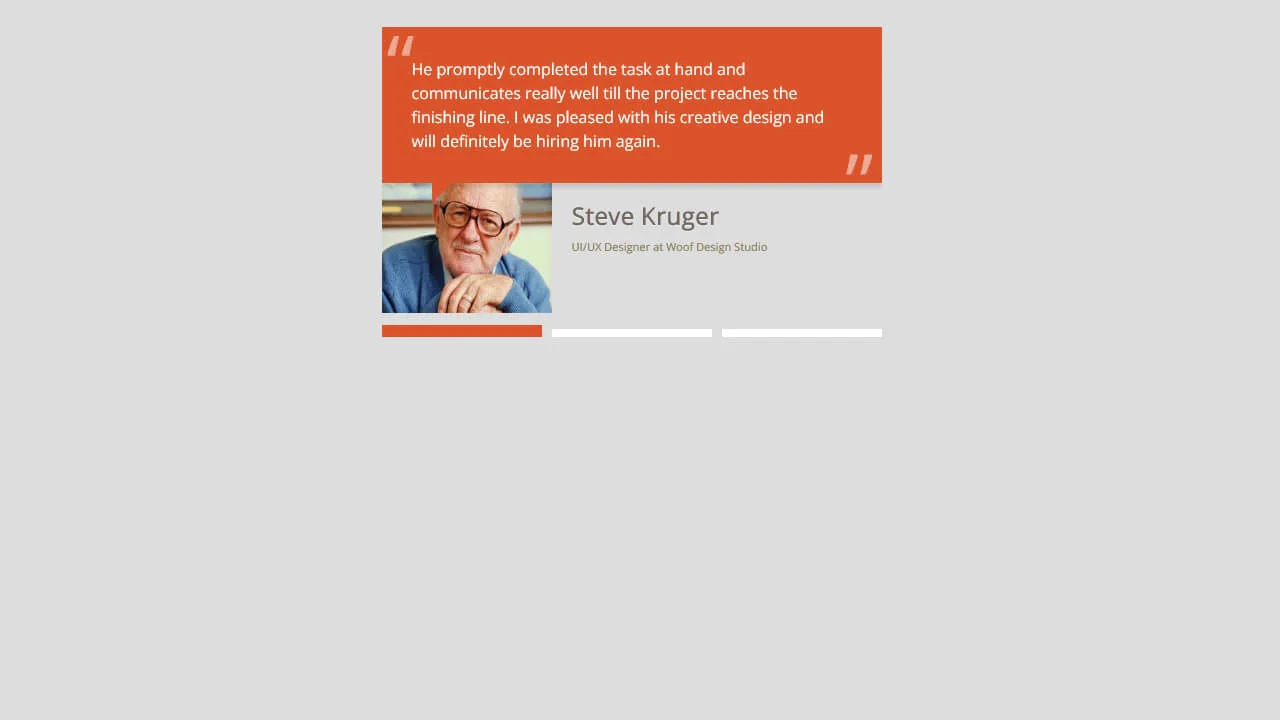
A testimonials slider powered by hidden radio buttons and CSS transitions. Switching between three reviews changes the background color and slides the content. No JavaScript — just selector toggling and animation. Simple, reliable logic.
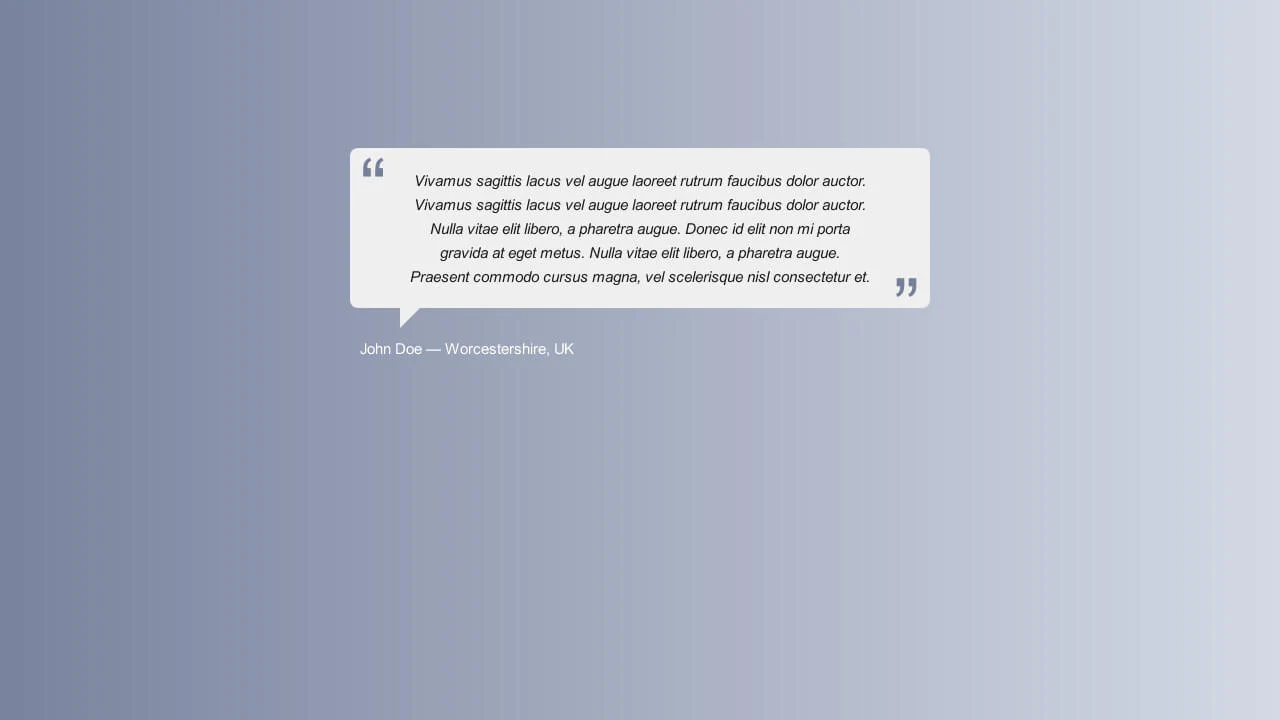
A minimal testimonial component: quote styled with pseudo‑element quotation marks, a triangular pointer made with borders. Linear‑gradient background, no scripts. A self‑contained block, ready to copy and use.

Two testimonial blocks featuring a quote, photo, and author name. The arrow is carved out with borders, protruding from the quote box to create a speech‑bubble effect. Minimal styling — just shadows and pseudo‑element quotation marks.
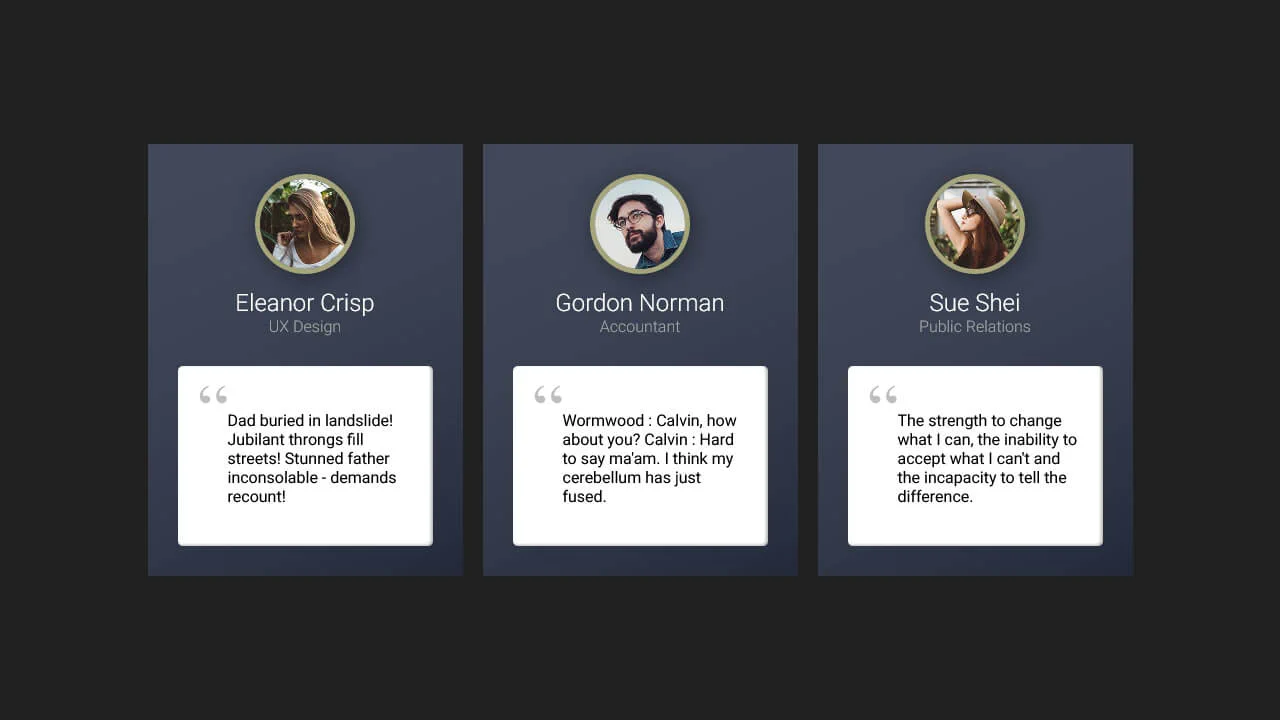
A testimonial card with photo, name, title, and quote. Gradient background and shadows add depth; a large quotation mark is carved out via a pseudo‑element. jQuery is used only to reset a class on mouseleave — all other animation is CSS.

A testimonial card with a raised quote icon and a coloured top bar. jQuery is included purely for demo purposes — it removes a class on mouseleave, though the class isn’t actually used in the CSS. Otherwise, it’s plain HTML and CSS, no extra logic.
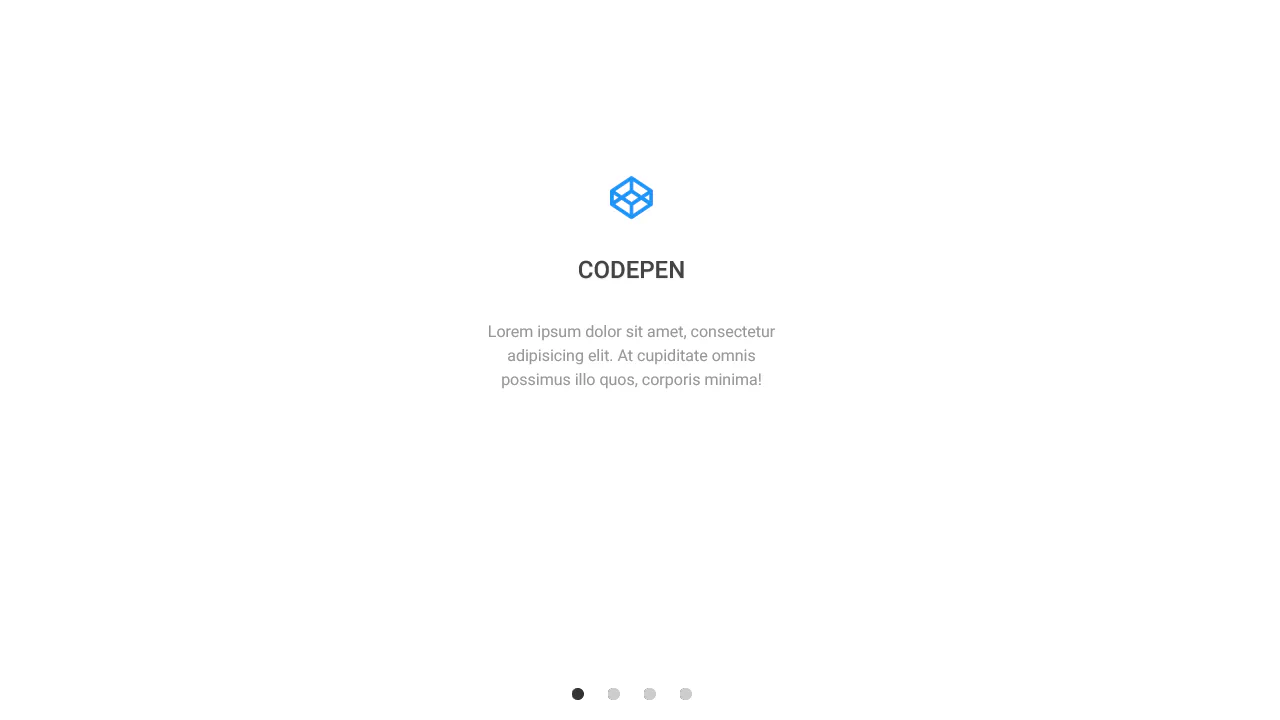
This slider uses hidden radio buttons and CSS transforms. Selecting a button shifts the container left by a percentage. Navigation dots are styled with outline and animate on click. No JavaScript — just pure CSS.
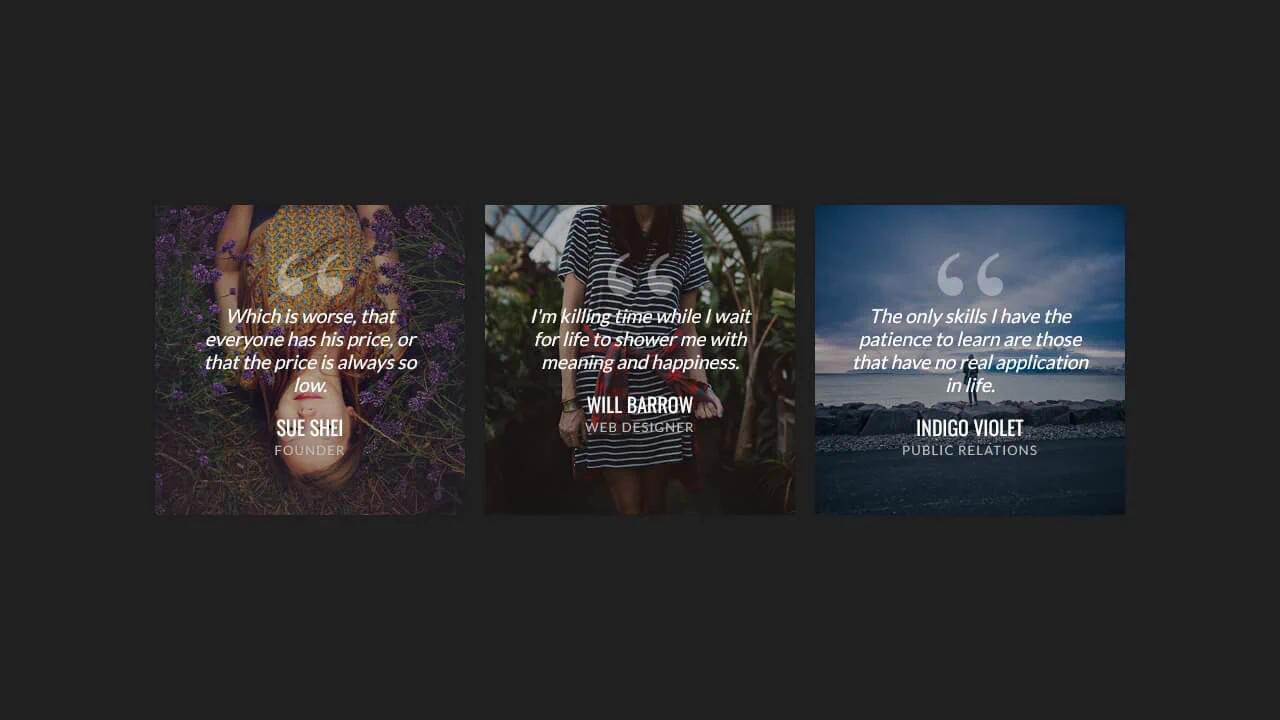
Three testimonial cards with a background image, quote, and author details. Text overlays a dimmed photo; a large quotation mark is added via a pseudo‑element.
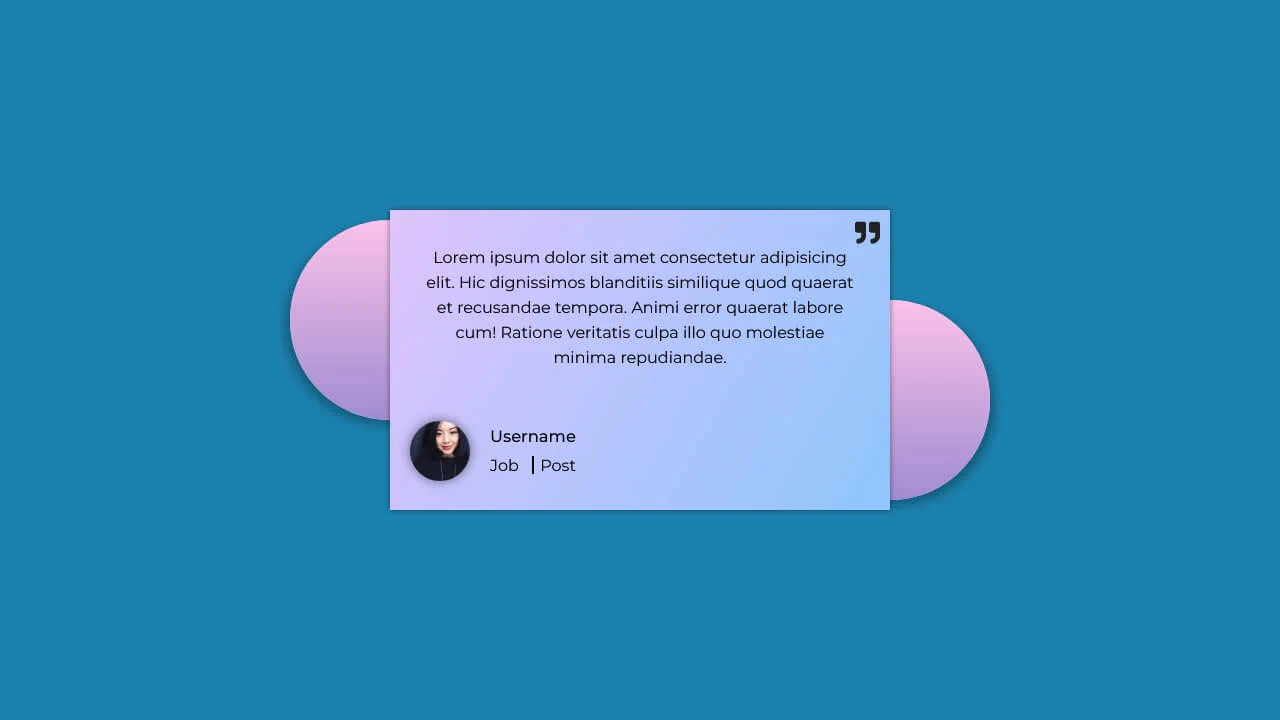
Testimonial card built with CSS Grid: quote and author details align neatly. Two blurred gradient circles are added via pseudo‑elements for background texture. Quote icon and job separator are styled without extra markup. Clean, predictable implementation.
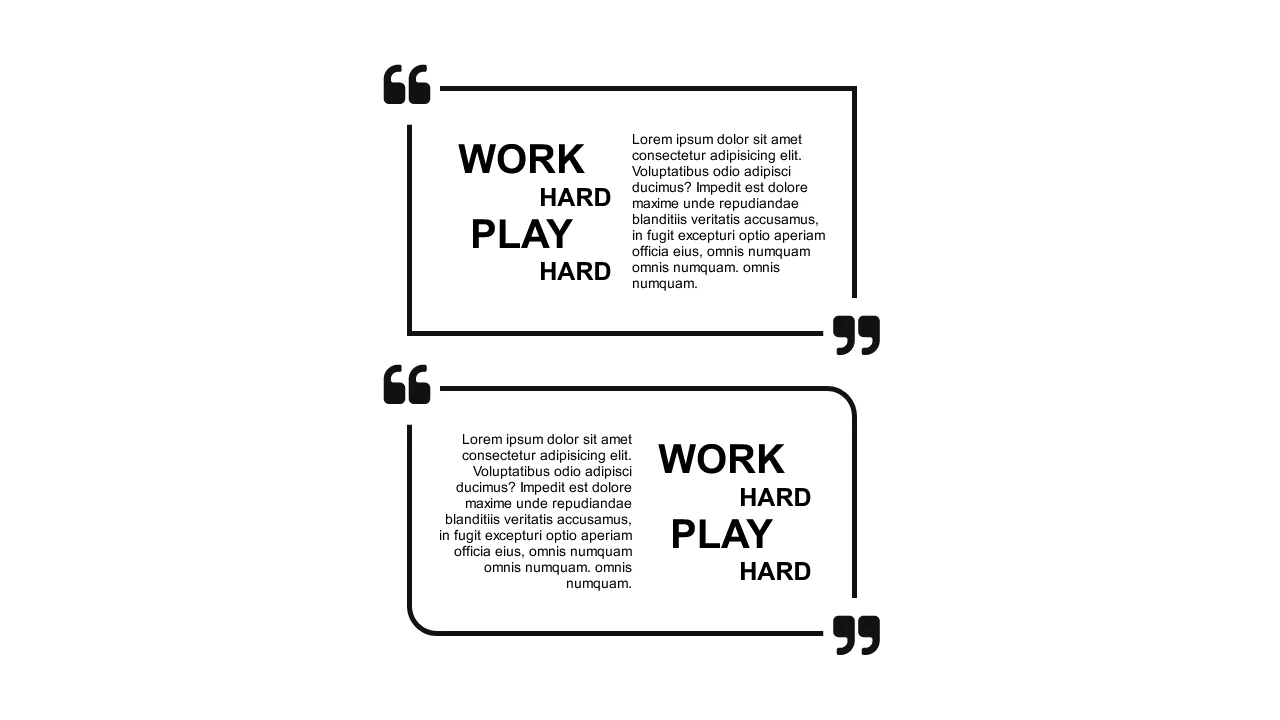
Quote block styled with :before and :after pseudo-elements, loading quote icons from FontAwesome. Vertical alignment uses display: table-cell. Two layout variations (text left/right) are controlled by simple classes. Minimal markup, all handled by CSS.