1 CSS Wood Effects
This updated collection explores the return of tactile elements in modern UI design through skeuomorphic wood simulations. Wood textures provide a warm, organic feel that enhances user intuition in specialized interfaces like digital planners or artisanal e-commerce sites. Using these curated snippets allows developers to add sophisticated depth to their projects without relying on heavy, unoptimized raster images that could slow down initial page loads.
Technically, these examples utilize complex HTML structures combined with multiple repeating-linear-gradient and radial-gradient layers to mimic natural grain patterns. We focus on hardware acceleration for smooth hover states and utilize background-blend-mode to ensure high layout stability. These CSS-only solutions avoid the bandwidth costs of external assets while remaining highly performant on the compositor thread, preventing expensive repaints during user interaction.
Every free demo in this library is fully responsive and cross-browser compatible. You can easily download the source code or fork a specific project on CodePen to customize wood types, knots, and shading.
Examples
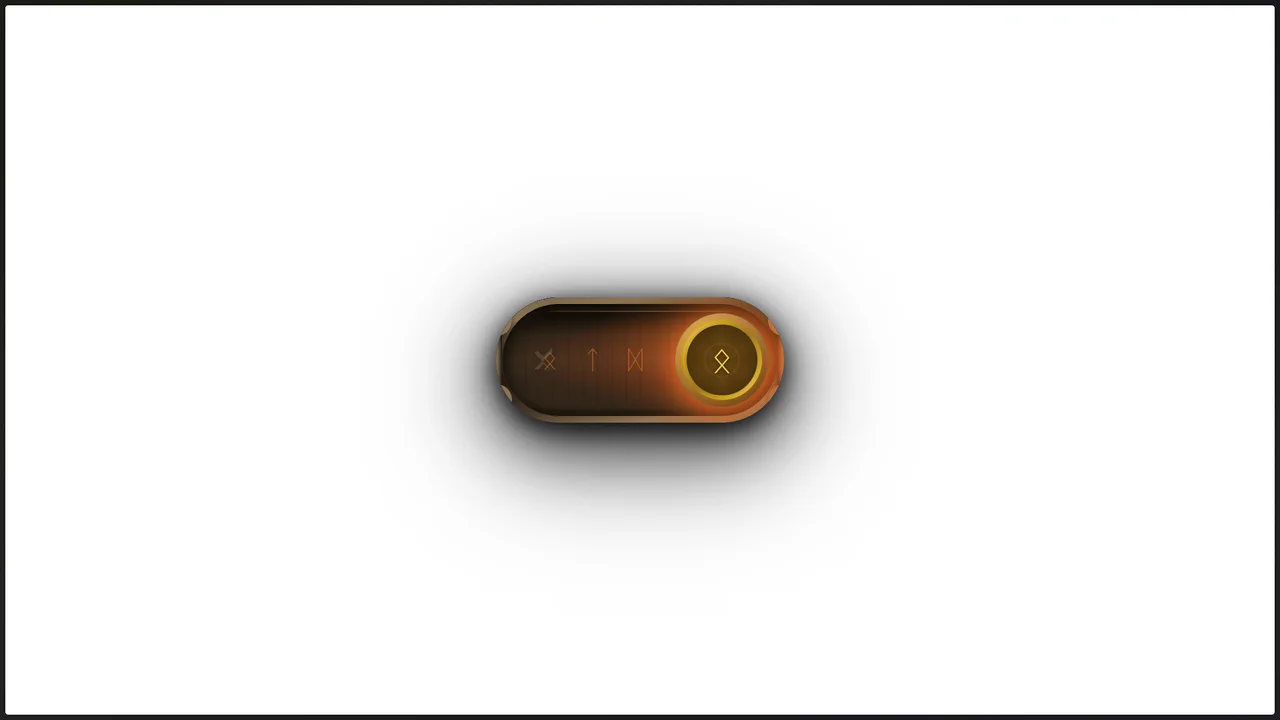
Viking Rune Wood Toggle
This Viking Rune Wood Toggle demonstrates how far CSS styling can go without JavaScript. It recreates a physical artifact - a wooden switch with bronze inlays and magical runes - perfect for RPG game interfaces or fantasy-themed websites. The switch features a “fire” state when active, complete with pulsating runes and floating ember particles, creating an immersive, tactile experience.
 Chrome 60+
 Edge 79+
 Firefox 55+
 Safari 11+
See the Pen Viking Rune Wood Toggle.