2 JavaScript Fire Effects
This collection explores various techniques for creating fire effects, from classic to cutting-edge. The fundamental 2D particle system on Canvas, where JavaScript manages the lifecycle of each “spark,” is covered, as well as creative CSS hacks with animated box-shadow. For maximum realism and performance, the power of WebGL shaders is demonstrated, which use procedural noise to create organic, “liquid” flames. This is your guide to procedural animation, from lightweight styling to complex GPU-accelerated simulations.
Examples

PixiJS Procedural GLSL Flame
This is a PixiJS Procedural GLSL Flame. It generates a hyper-realistic, endlessly animating flame entirely through mathematical functions inside a fragment shader. Its function is to provide a high-performance visual effect without relying on video files or sprite sheets, using procedural noise to simulate the chaotic turbulence of a real fire. (Requires: PixiJS)
 Chrome 60+
 Edge 79+
 Firefox 55+
 Safari 11+
See the Pen PixiJS Procedural GLSL Flame.
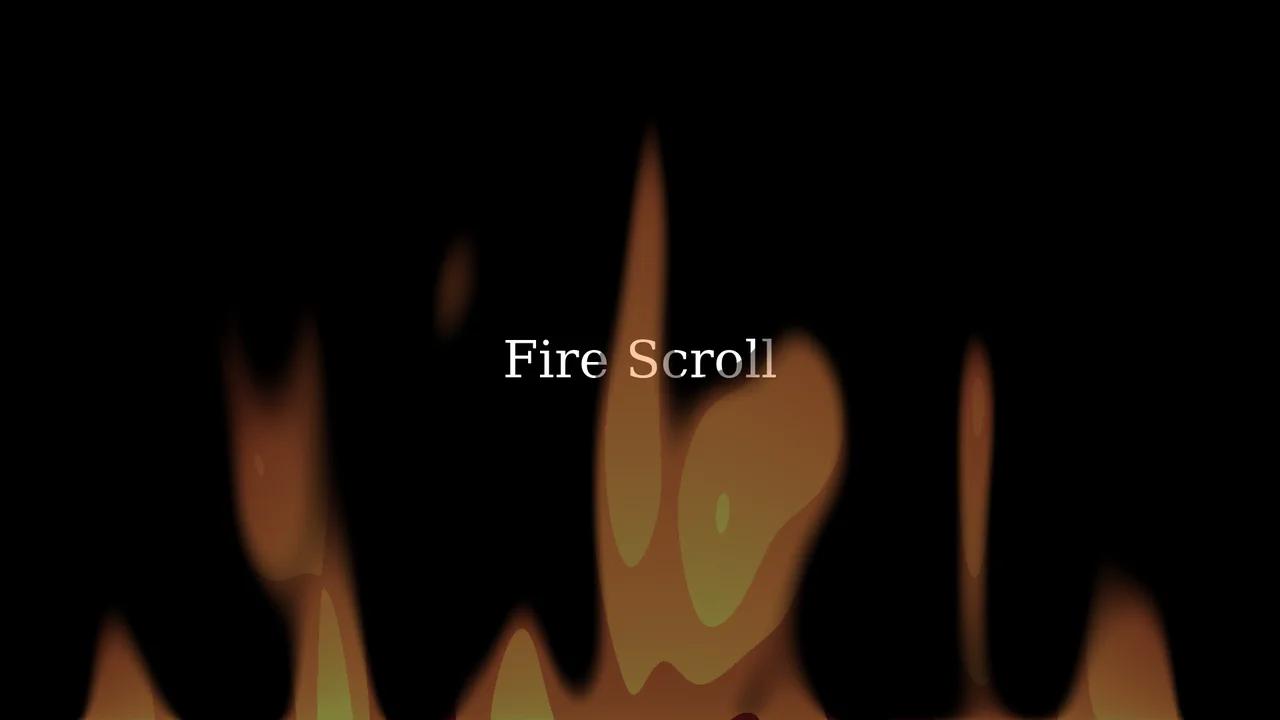
On-Scroll Fire (Three.js + GSAP)
A stylized, “digital” flame that evolves over time but obediently transforms (fades or flares up, changes geometry) in response to user interaction (scrolling).
See the Pen On-Scroll Fire (Three.js + GSAP).